
The story behind Roopkund trek.
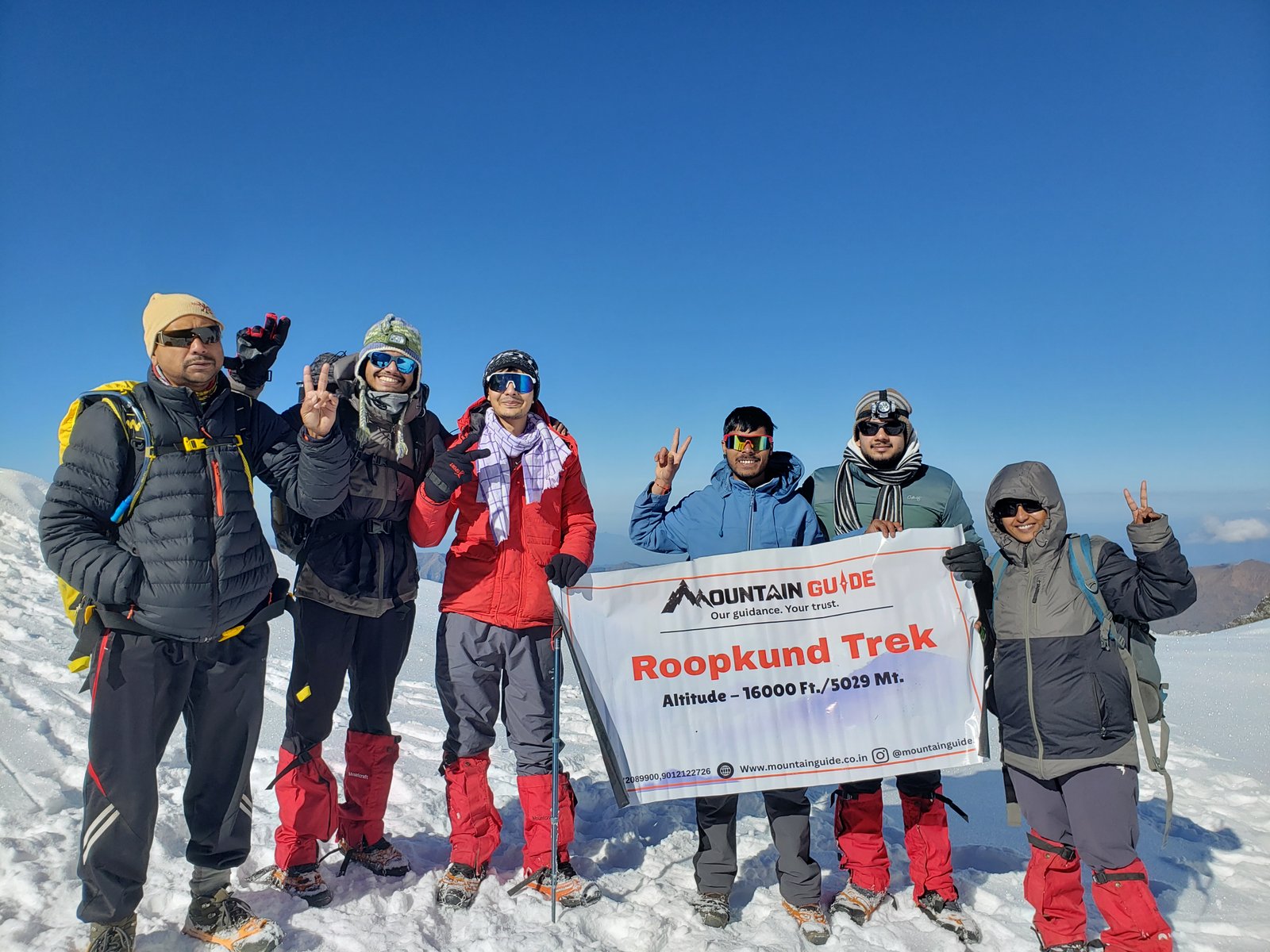
The Stories Along the Trail to Roopkund
As told by a senior trek leader - Heera Singh Bisht
The Trail Begins at Wan
The Roopkund trek is remembered for the lake at the end. But the trail has its own cast of characters: a village temple, a forest camp, wide meadows, a place named for dancers, and a final high camp where the mountain makes every step feel deliberate.
For a trek leader, the work begins before the first climb. At Wan, we check the group, sort out the day’s plans and make sure everyone is ready. The village is more than a starting point. The Latu Devta temple gives the trail a sense of arrival: we are leaving the familiar roads behind and entering a landscape where local belief and mountain life travel together.
Gehroli Patal: Into the Forest
From Wan, the path climbs through forest towards Gehroli Patal. The air grows cooler under the trees, and the rhythm of the group settles into the sound of footsteps and conversation. This is our first campsite: a place to rest, eat and get to know the people who, a few days earlier, were strangers. The forest can feel like a world of its own, but it also gives us a quiet reminder: the mountains set the pace here.
Ali Bugyal: A Meadow Without End
The next stretch opens onto Ali Bugyal, a high alpine meadow. After the close forest, the sudden sweep of open grassland feels immense. The meadow is often described as one of Asia’s largest high-altitude meadows; Indiahikes also highlights its scale as a defining part of the Roopkund route. On a clear day, the open slopes and distant peaks make a natural gathering place for the group—though the weather can change quickly, and we keep moving with care.
Past Bedni, Toward Patar Nachauni
The route continues past Bedni Bugyal, another celebrated meadow, before climbing towards Patar Nachauni. Bedni is an important landmark on the way, even when it is not one of the group’s overnight camps. On this trail, the names are part of the journey: each one marks a change in terrain, and often carries a story of its own.
Patar Nachauni: The Story of the Dancers
At Patar Nachauni, the story is in the name. “Nachauni” brings to mind dancers, and local folklore connects the place with Raja Yashdhaval’s party and the dancers who accompanied it. The details vary from one telling to another. On the trail, I share the version I heard from my elders and local guides—not as a record of proven history, but as a story the mountains have kept alive.
Bhagwabasa: The Last Camp Before the Summit
From Patar Nachauni, the climb towards Bhagwabasa becomes more demanding. The landscape grows sparse, the air thinner, and the group quieter. Bhagwabasa is the last campsite before the summit push to Roopkund. We reach it with one main task ahead: prepare for the early start. We check layers, water, food and headlamps, and talk honestly about how everyone is feeling. At altitude, getting to the lake is never more important than making sound decisions as a team.
Roopkund: The Lake and Its Mystery
The summit day begins in the dark. One headlamp follows another up the trail. As the sky lightens, the mountain slowly appears around us. Reaching Roopkund Lake, at roughly 5,000 metres, is a powerful moment—but the lake’s reputation comes with a difficult history. Human remains have been found around its shores, giving it the name “Skeleton Lake” and drawing attention from researchers and visitors for decades. The BBC has described how the site became the focus of a long-running mystery.
Research has changed how we understand that mystery. A 2019 study in Nature Communications analysed ancient DNA from 38 individuals and radiocarbon-dated remains from 37. It found that the people did not all die in one event: the remains included groups deposited at different times, roughly a thousand years apart. The study identified South Asian ancestry among one group and eastern Mediterranean ancestry among another, while the reason these people came to the lake remains unknown.
The Summit Is Only Part of the Journey
On the Roopkund trail, each campsite leaves a different impression: Wan’s devotion, Gehroli Patal’s forest hush, Ali Bugyal’s open sky, Patar Nachauni’s folklore, Bhagwabasa’s resolve and the lake’s unanswered questions. The summit may be the destination, but the stories begin long before we reach it.
The Legend Our Trek Leader Shared
That evening at Patar Nachauni, after the day’s climb, our trek leader told us a story passed down along this trail.
Long ago, Raja Yashdhaval set out on a pilgrimage with his queen, attendants and a large party. They were travelling through the high mountains towards the sacred lands associated with Nanda Devi. Among the king’s companions were dancers, brought along to entertain the royal party during the journey.
The path climbed into the mountains, where every meadow and ridge was treated with reverence. But, the story goes, the dancers began to sing and perform along the way. Their celebration was out of place on a sacred route, and the goddess was angered by the noise and the disrespect shown to her domain.
The king’s party continued onward. When they reached the place now called Patar Nachauni, the dancers performed once more. The goddess’s punishment followed: the dancers were turned to stone, and their dance came to an end on the mountainside. The name Patar Nachauni is often explained through this tale as “the place of the stone dancers.”
The legend says the rest of the party pressed on towards Roopkund. There, a fierce storm swept across the high slopes. Hailstones struck the travellers, leaving the king’s party scattered across the mountains. In some tellings, the king survived and understood the storm as a sign of the goddess’s anger. He returned with a new respect for the sacred route, and the story became part of the tradition surrounding the Nanda Devi pilgrimage.
When our trek leader finished, the place felt different. Patar Nachauni was no longer just a camp on the route; its name carried a warning about humility in the mountains. And Roopkund, waiting above Bhagwabasa, seemed to hold the final chapter of the tale.
This is a local legend, not a confirmed account of the people whose remains have been found around the lake. Scientific research indicates that the remains came from different groups who reached the area at different times. The legend remains part of how people tell the story of the mountain—and how the trail’s names keep those stories alive.
Heera singh Bisht
Mountain Content Specialist & High-Altitude Trek Leader at Mountain Guide.